


Trends in In-Store Experiential Marketing
Experiential marketing isn’t always about building elaborate stages and displays for big sporting events, music festivals, or urban gatherings.
Print service providers that create retail graphics, point-of-purchase (POP) displays, trade show displays, or branded interiors can discover new business opportunities by understanding why agencies drawn to experiential marketing are innovating to create more impactful in-store experiences.
■ Background
In the post-COVID era, brands and retailers have discovered that well-executed in-store experiences can give digital natives (millennial and Generation Z shoppers) something they can’t get online — a real-world feel for the brand’s products and values.
In a Path to Purchase Institute blog post, Dan Sabanosh, director of shopper marketing of the retail display company Great Northern Instore, listed experiences as one of the top five in-store trends that dominated retail in 2025.
When the retail brand experience agency ChangeUp surveyed 2,000 shoppers from four different generations, they found that experiences are becoming increasingly important in attracting millennials and Gen Z shoppers (currently aged 12-43). According to the survey, 50% of Gen Z shoppers find in-store shopping stressful, and 72% of millennials say the quality of in-store experiences influences where they shop.
“Consumers are looking for spaces that deliver discovery, inspiration, and authentic connections that even the best digital experience can’t replicate,” Lynn Gonsior, COO and co-founder of ChangeUp, says.
In-store activations come in many forms, depending on each brand’s budget and goals.
Here are a few examples of how agencies are innovating.
■ Face-to-Face Conversations
Marketing agency Old City Media is focusing on the human-interaction element of in-store experiences.
Instead of conducting surveys or using in-store displays with QR codes to capture data from shoppers, Old City Media founder Ray Sheehan developed a simple, flexible program that enables brands to get honest, in-person feedback from shoppers in the brand’s targeted demographic.
The brand sets up a booth within a retail store and offers store gift cards to shoppers who spend a few minutes chatting with brand representatives in the booth.
Elements of each in-store activation range from a simple tabletop exhibit and signage near the store entrance, to a parking-lot exhibit featuring a graphic-wrapped delivery truck behind the tabletop exhibit.
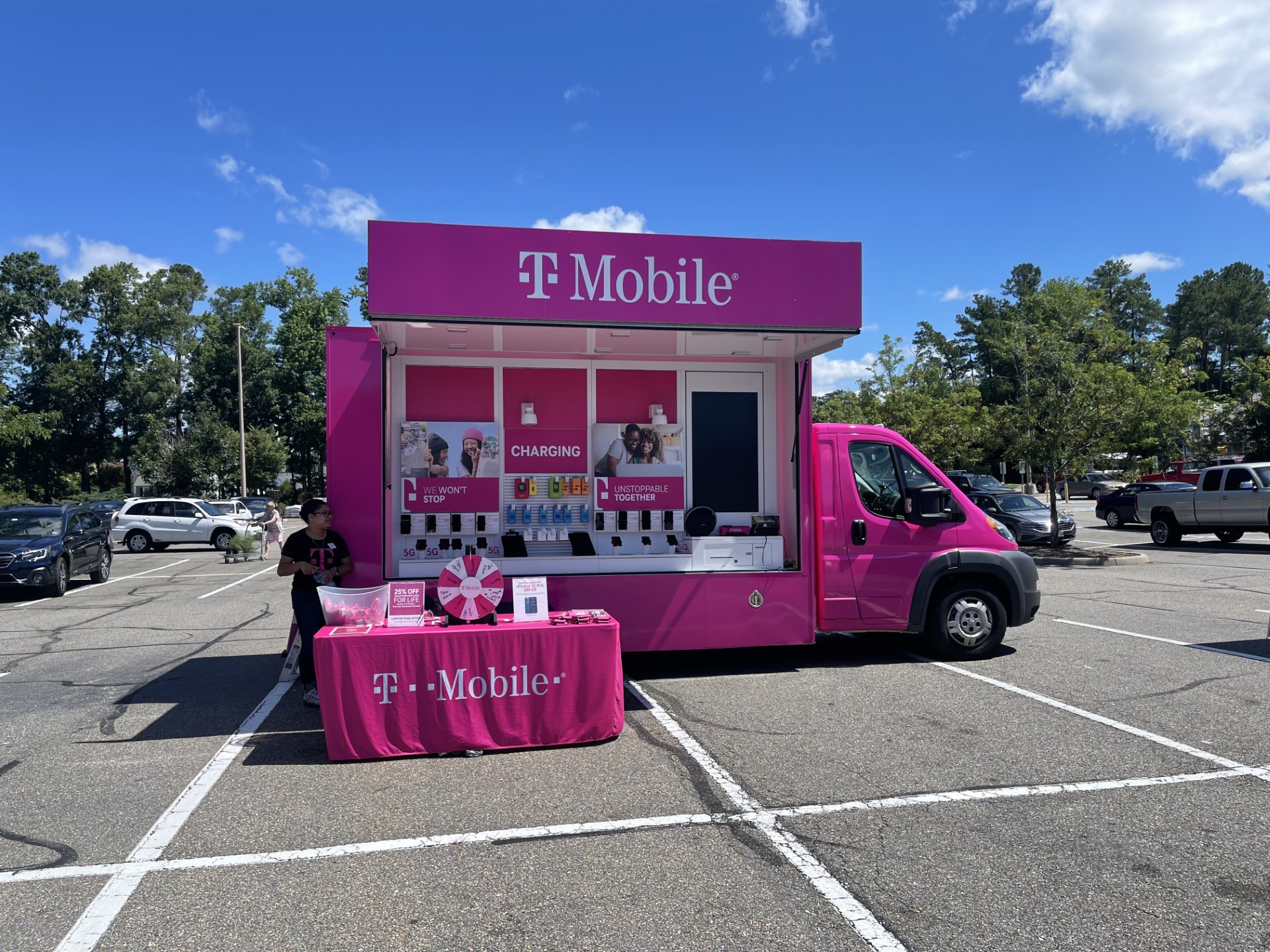
Sheehan helps each brand outline how success will be measured, and uses artificial in intelligence (AI) to identify the store locations and times that will bring the highest volume of foot traffic from their target audience.
If an in-store activation is successful in a handful of locations, the brand may repeat it in dozens of other stores.
“Each brand is different in terms of whether they want to get cell phone numbers, email addresses, or appointment bookings,” Sheehan says. “But essentially what they really want is to engage in conversation.”
Sheehan came up with the concept during the COVID shutdown, when the big day-long festivals Old City Media organized in major-league ballparks were canceled. He wanted to provide brands with alternative ways to speak directly to consumers.
Old City Media set up the first in-store experiential activations in grocery and home-improvement stores — some of the only places homebound consumers could visit.
So far, Old City Media has conducted more than 50,000 in-store brand activations, which Sheehan says benefit brands, retailers, and consumers.
Brands like the concept because they can amplify their marketing messages without competition from other exhibitors. “We make the client the star of the show,” Sheehan says.
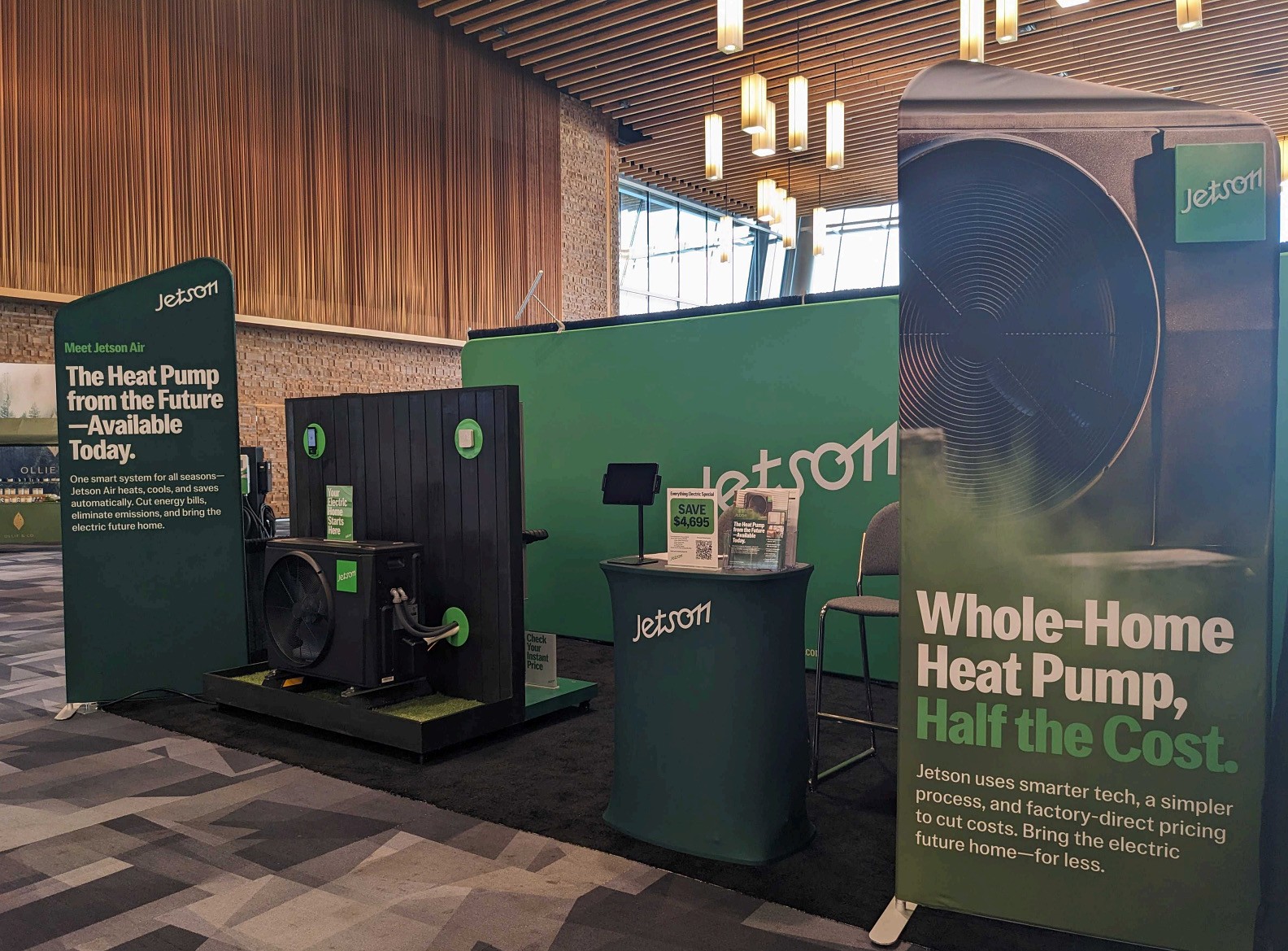
Marketers use feedback from targeted consumers to tweak their messaging or strategies. And shoppers who interact with the brand walk away with a gift card and a positive feeling about the brand and its products.
“Anyone can go to the brand’s website and talk to an AI chatbot,” Sheehan says. “But sometimes people like to talk to a real person.”
Retailers like the in-store booths because, “We help them monetize their business with non-sales revenue,” Sheehan explains. In addition to being paid for valuable floor space, retailers may get additional money when the gift-card recipients return to the store to redeem them.
Sheehan also assures retailers the activations won’t turn the store into a carnival. Each installation is extremely turnkey, and there can be no high-pressure sales or other annoying tactics. A small footprint is also important, because in-store floor space is at a premium. But Sheehan believes a lot can be achieved in a well-designed small space.
Like most experiential agencies, Old City Media doesn’t choose graphics partners solely on what they are equipped to print. The company seeks reliable graphics suppliers who are also prepared to help with support services such as logistics and setup.
Sometimes Old City Media only needs a few printed elements from a local company. For bigger retailers, they rely on larger graphics companies that can deliver and set up a mix of graphics in multiple locations.
■ In-Mall Installations for Fast-Growing StartUps
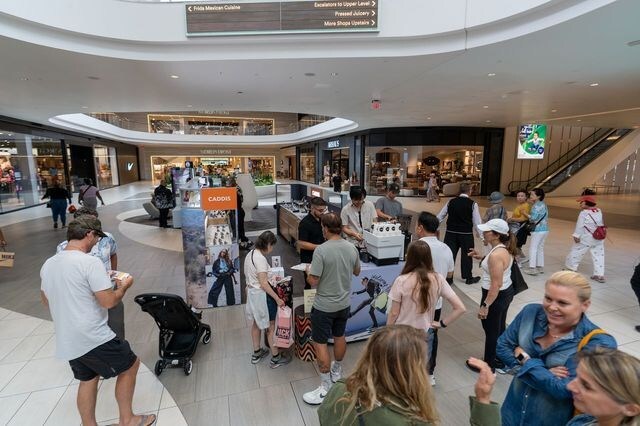
IEM, a venture-backed retail innovation company, has partnered with Simon, a real estate investment trust, to set up turnkey experiential retail environments for promising emerging brands. The demonstrative 10x15-ft. branded, experiential “micro-spaces” are positioned in the highest-traffic common areas of malls.
Shoppers can touch the startup’s physical product in a space that doesn’t require the brand to invest in a long-term lease for a physical store. IEM enables brands to choose the services they need for each micro-store, such as design and production, staffing, day-to-day operations, or reporting.
“We started IEM to help brands bridge the gap between digital and physical retail,” James Lesser, CEO of IEM, says. “We believe the future of retail isn’t just about opening stores — it’s about doing it intelligently, with flexibility, control, and a team that knows how to execute.”
■ Interactive, Immersive Product Displays
Because online purchasing is so common among Gen Z and millennial consumers, retailers are striving to remove disconnects between online purchasing and in-store shopping. When stores can function as fulfillment sites for online purchases, they can focus less on high-pressure in-store sales tactics and more on creating memorable in-store experiences.
As a result of this shift in focus, some traditional POP retail displays are becoming more elaborate. Interactive displays and sampling tables can not only enhance sales but also reinforce the brand’s story. For example, beauty brands create endcap displays to enable consumers to test fragrances or makeup samples without the high-pressure sales tactics of department-store beauty-product counters.
In October, Target partnered with Netflix to introduce a dedicated in-store and online shopping destination for fans anticipating the final season of the popular series “Stranger Things.” The display enables fans of “Stranger Things” to explore more than 150 new “Stranger Things”-inspired items in one easy-to-shop space. Items include apparel, collectibles, home products, toys, and food and beverage products.
More than a display, the themed in-store environment was designed to offer fans a portal to Hawkins, Indiana, the fictional town in the series known for supernatural events. To attract repeat visitors, the items on display were scheduled to change until the series finale at the end of 2025.
“Consumers are looking for spaces that deliver discovery, inspiration, and authentic connections that even the best digital experience can’t replicate.”
—Lynn Gonsior, COO and co-founder of ChangeUp
■ Re-Imagined Retail Stores
Some retailers such as Dick’s Sporting Goods are building stores that integrate memorable customer experiences throughout the space.
The Dick’s House of Sport store format expands the square footage of traditional Dick’s Sporting Goods stores to accommodate omnichannel sales integration, flexible store layouts, and customer connection.
For example, the Dick’s House of Sport at SouthPark Mall in Strongsville, Ohio, transformed a two-level 100,000-sq.-ft. former Sears store into a destination for sports enthusiasts from the region.
The space features a rock-climbing wall, batting cages, golf simulators, and an outdoor field that can be used for clinics and leagues in the summer and as an ice rink in the winter. Other locations offer a similar mix of in-store customer experiences, athletic events, product launches, and community engagement. Over the next few years, Dick’s plans to open 75 to 100 House of Sport stores.
Learn More About What’s Involved
Experiential marketing activities aren’t limited solely to big exhibit builders and top agencies. Those organizations employ creative teams skilled in 2D graphic design, 3D structural design, multimedia content, interactive technology, and exhibit fabrication. The design process may include 3D renderings as well as architectural/build blueprints.
But as Old City Media has demonstrated, thousands of under-the-radar activations are conducted each year with relatively modest, trade-show-like booths.
To keep up with evolving approaches to experiential marketing, consider attending conferences that attract retailers, brands, or experiential agencies. Not only can print service providers learn more about the latest trends and ideas, but also the pain points of brands and retailers that use experiential marketing.
For example, The Experiential Marketing Summit will be held May 18-20, 2026, at the MGM Grand Hotel in Las Vegas, Nevada. This event attracts brand-side marketers, trade show organizers, experiential agency executives, experience designers, and event technology gurus. Event Marketer organized the summit because “The rules of experiential marketing are being rewritten in real time.”

