


Could Direct-to-Object Printing Enhance Your Productivity and Profitability?


Editor's Note: This article was written for Promo Impressions. For more content on promotional products decoration, be sure to subscribe to the biweekly newsletter at PromoImpressions.com.
“Work it harder, make it better, do it faster…” They may be almost 25 years old, but these lyrics from the early 2000s Daft Punk hit could be seen as something of a mantra for the promotional products industry in 2025. Wherever you look, from blogs, podcasts, and trade magazines to conferences and conversations with customers, the topics that crop up again and again have a central theme: Everyone is trying to do more with less.
Even before the question of tariffs entered the equation, businesses were looking for ways to adapt to the shortage of skilled workers, extreme variations in order volumes, and a growing appetite for on-demand production, all underpinned by an ever-present need to maintain high quality standards while simultaneously turning a profit.
While it’s no silver bullet, the answers to some of these myriad challenges may be on the factory floor itself, in the realm of the production technologies businesses use to decorate products.
Direct-to-Object Printing 101
Direct-to-object (DTO) printing technology first emerged in the mid-2010s, and since then, it has proven to be a disruptive technology in both the promotional and industrial printing markets, and its growth shows no signs of slowing down.
The combination of advanced inkjet technology and UV curing is what makes DTO possible. Enabling an almost instantaneous drying process, the technology ensures each ink droplet stays exactly where it should, with no bleeding (spreading). This allows for precise reproduction of vividly colored digital images, as well as fine lines, text, and numbering. In the realm of cylindrical UV inkjet DTO printing technologies, such as the Inkcups Helix range, vibrant, multicolor, edge-to-edge graphics and intricate designs that wrap 360° around straight-sided and tapered cylindrical objects are possible.

Credit: Inkcups
With this printing technology, print has moved far beyond two dimensions. Drinkware, coasters, stainless steel tumblers, sports bottles, pens, candle holders, sporting goods, wood products, reusable bags, glass spirits bottles, beverage cans, automotive parts, ceramic tiles, home decor items, stationery, tech accessories, coolers, and even candy tins. With the right technology, inks, and pretreatment, DTO printing makes it possible to print directly onto almost anything you can imagine.
Increasing Operational Flexibility to Free Up Your Team
Leaving aside the quality, precision, and wide color gamut that DTO makes possible across a variety of shapes and challenging substrates, the drivers behind its growing adoption for productivity reasons are particularly interesting to explore.
Consider, for example, the much-lamented skills and labor shortages facing both the print and promotional goods industries in the U.S. With production managers up and down the country looking for ways to utilize their workers’ time as efficiently as possible, one of the appeals of DTO printing is the reduced setup, takedown, and cleanup times that it enables. The minimal setup means that DTO technology is also more accessible to operators from a broader range of backgrounds. Training time is predominantly around software and maintenance, so even operators with not much prior print industry knowledge can be up and running in a short time.
Another appeal of the minimal setup and takedown times is, of course, what this means for overall productivity. If team members can spend less time preparing for and cleaning up in between jobs, more can be produced in less time, and response times can also be far shorter.
Capitalizing on Opportunities in Customization and E-Commerce
Within the realm of promotional products, one of the other print industry sectors that has moved fastest to capitalize on the capabilities of DTO printing is the gifting sector. With order volumes of one able to be produced as cost-effectively as larger volume orders, DTO has an obvious appeal for personalization and mass customization in applications such as party and wedding favors, personalized drinkware, and gift packaging.

Credit: Inkcups
Alongside this, as consumers’ appetite for personalization has increased and photo printing has become increasingly ubiquitous, a new market segment has emerged to meet demand from people looking for ever-more creative ways to individualize their homes, cars, workspaces, and the objects they use every day.
This growth of the consumer print-on-demand (POD) market has also been fuelled by the explosive growth in e-commerce that we’ve seen over the past five years. This has given rise to a whole universe of print-on-demand platforms that offer both consumers and businesses the option to print their custom design onto almost anything before outsourcing this printing to their network or print partners. For promotional products decorators savvy enough to seize the opportunity, this can be a lucrative additional revenue stream, and one for which DTO’s versatility is ideally suited.
Reducing Waste to Optimize Production and Boost Sustainability
Outside of the promotional products and consumer POD market segments, the packaging world has been quick to recognize another core appeal of DTO — its suitability for reducing waste. In packaging, printing directly onto primary packaging makes it possible to dispense with shrink sleeves and adhesive labels, reducing waste resulting from production as well as energy throughout the wider supply chain. The resulting savings not only enable more efficient production but also boost sustainability by reducing unnecessary waste, increasing the incentive to print only what is needed when it is needed, and simplifying recycling for consumers.
Packaging’s example is one that many in the promotional goods market can learn from. For example, DTO can enable promotional goods producers to reduce waste during the production process itself. Unlike solvent and water-based inks, which typically dry through evaporation using heat, UV inks are cured through a chemical reaction that occurs when they are passed under UV light, which means they don't generate pollutants and also consume less energy. The process is also less water-intensive than other methods and does not generate waste like sublimation or transfer paper.
In addition, because DTO makes it cost-effective to produce single items, customized products, and small batches, it is no longer necessary to produce extra ‘just in case’ items that find their way into the convention center’s trash at the end of an event.
Sometimes, wider business challenges can be solved right on the production floor. When trying to do more with less, the answer may be to adopt a technology that does more with less all by itself. By enabling simpler, more reactive and less wasteful production, that answer, for many, could be DTO.
- Categories:
- Digital Printing – Direct-to-Object
Jessica Makrinos is the marketing manager at Inkcups, a supplier and manufacturer of direct-to-object inkjet printing equipment, pad printing equipment, laser platemakers, and corresponding supplies. Jessica has spearheaded the company’s global marketing efforts since 2016. Before joining Inkcups, she earned marketing experience through formal education and in marketing roles at robotics and software companies.
 Xaar's Inkjet Collaboration Delivers Innovation for Decor Application
 Roland DG Introduces Enhancements to TY-300 Direct-to-Film Printer
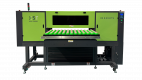 Inkcups to Showcase High Throw Direct-to-object Printing at PPAI 2026
 Work Smarter: Simple Tips to Boost Uptime and Reduce Changeovers
 Using the Inkcups X5-T High Throw Printer for Drinkware
 Taking Your Graphics to the Next Dimension

